
A BIG PROBLEM
Are you still draining your energy doomscrolling “news” instead of helping out in your own neighborhood? If so, you’ve got plenty of company. It’s the perfect storm of biology, psychology, and technology in our times, because our brains are hardwired to prioritize threats, making alarming news incredibly addictive. And when it’s amplified by social media algorithms engineered to trigger outrage, too many of us easily fall into a state of ‘learned helplessness ‘— feeling that our highly localized efforts are too small to matter. Essentially, we are trading actionable community engagement that could make a real, positive impact, for a cycle of overwhelming, distant, and negative information that we have absolutely no control over.
KEYPOINTS:
- Negativity Bias: Evolutionary wiring makes us pay more attention to threats.
- Information Overload & Powerlessness: The sheer volume of alarming news makes people feel overwhelmed, causing a sense of helplessness.
- Digital Addictiveness: Algorithms reward engagement (clicks/shares) for sensationalized negative content, often referred to as “doomscrolling”.
- Psychological Comfort: For some, constantly following, analyzing and talking about bad news provides a false sense of control or preparation for danger.

A SIMPLE SOLUTION
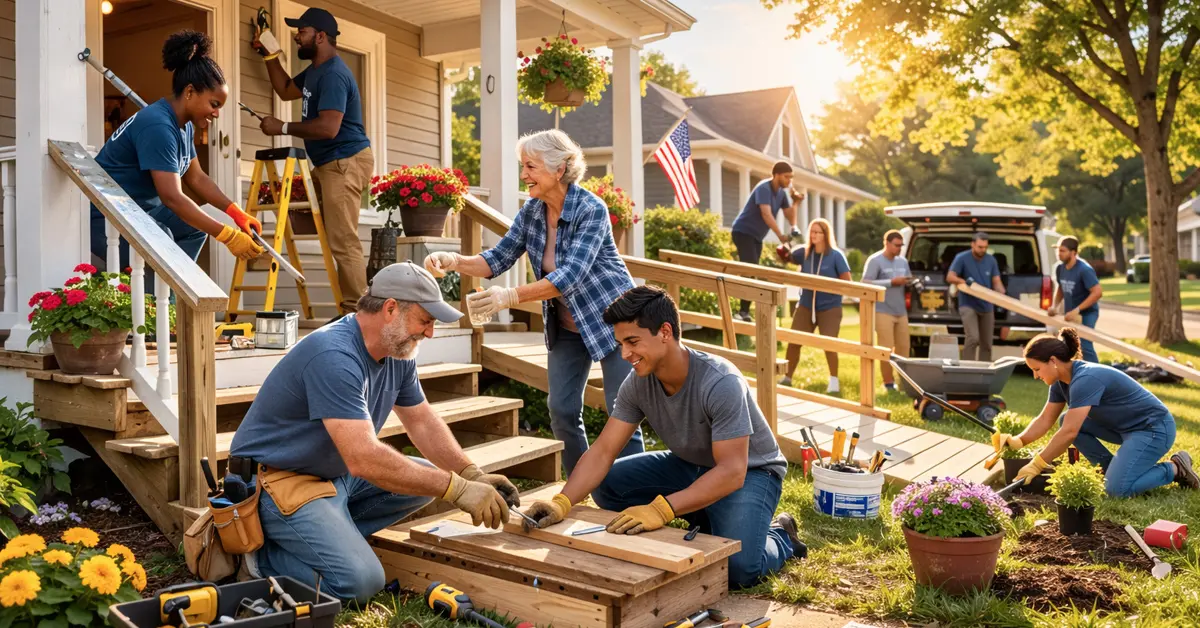
Whether in the Southwest or Midwest, I love my neighborhood. I love all the little details, and can find comfort in the simplest of things, whether it’s the familiar landmarks like my stretching boulder, or the citrus tree out back, or the tiny vermilion flycatcher I managed to befriend at the park down the street. But if I had to pinpoint the one thing that truly makes my neighborhood special, it’s the people.
You don’t have to be in Congress to make a positive change in this country. In fact, by thinking locally, you’re able to take immediate and significant actions, big or small, that benefit you and the people around you. And the best part is that there is nothing stopping you (short of that doomscrolling habit) from starting today!
So if, like many, you’re looking to positively impact your community but aren’t quite sure how to get moving, here are some distilled Go Forth ideas to help you break the cycle of futile activity and actually accomplish something worthy.
1. Be the kind of neighbor you would appreciate. Sometimes the smallest thing, like saying hello to someone on the street, can have the biggest impact on a person’s day. I’ve lived in neighborhoods where no one knew each others’ names, and now I have neighbors who leave tasty stuff like pies and brownies on my doorstep. Take a guess which I appreciate more. Getting to know the people around you –– starting with your next door neighbors –– will help you forge a meaningful connection to the community in your midst so that you can start leaving people better than you found them.
Simple tips for being a good neighbor:
- Be the welcome wagon for new neighbors.
- Offer to help homebound or vulnerable neighbors by picking up their groceries, shoveling their driveways, mowing their lawns, or hauling in their trash cans.
- Be a mentor and share your skills.
- Host a gathering.
2. Be generous with your time. It takes a fair amount of people for a neighborhood or town to be a great place to live, and not just the ones who are employed to do so. Volunteering your time is a rewarding way to contribute and it can simultaneously provide you with valuable experience. Think about what skills you have (or want to develop) that could be useful to others. There are endless opportunities to give your time, whether it’s something you do on your own or by partnering with an organization doing its part to improve your neighborhood.
Simple ways to share your time:
- Clean up a park or empty lot.
- Volunteer at your library.
- Walk dogs for your aging neighbors.
- Organize a clothing or food drive.
- Join a neighborhood watch.
- Volunteer for the Parent Teacher’s Association (PTA).
- Coach or mentor kids.
3. Put your money where your mouth is. Even if you’re short on time, you may still have the power to uplift your neighborhood financially. Think of your dollars as votes for the community you want to live in. Whether it’s supporting local, investing in community projects like that new playground equipment, or shopping small instead of with big-box retailers, your spending makes a difference. Support the local merchants who support you and your neighbors.
Simple ways to support your community financially:
- Shop local.
- Donate to local organizations.
- Sponsor a local event.
- Support a GoFundMe of a neighbor who could use extra support.
- Adopt a bench, sponsor a sidewalk brick, etc.
4. Clean it up. So you’ve got a tidy and self-sufficient home, but what about the rest of your neighborhood? Regardless of your environmental stance, everyone appreciates a clean, vibrant, and, well… pleasant-smelling neighborhood (mine actually smelled like bacon this morning, which is not such a bad thing). But how can you take those good habits from your home out into your community? Simply put, it’s all about leading the way. Are you good at gardening? If so, start a community garden to beautify your neighborhood, get outdoors, and meet your neighbors.
More simple ways to clean it up:
- Plant a tree in your yard.
- Walk, bike, ride a horse, etc., and leave the fuel burner in the garage.
- Set up local recycling stations.
- Start a community composting program.
- Plant or participate in a community garden.
- Join a food co-op or CSA (Community Supported Agriculture).
5. Get involved in local government. Getting involved in local government is essentially turning into the superhero your neighborhood deserves, without needing a spandex suit or flying lessons. It’s a high-impact, low-cost way to get your voice heard directly, whether you’re fighting for more bike lanes, saving a local park, or debating the crucial merits of a proposed development. Beyond the sheer joy of seeing your ideas come to life, it’s an incredible, often overlooked, way to meet and serve your neighbors, boost your civic skills, and actually understand where your tax dollars are going. Plus, because city council meetings are far more accessible than national politics, you get the satisfaction of actually, you know… getting stuff done! It’s the ultimate way to turn “why doesn’t someone do something?” into “I am the one doing something!”—and that, frankly, is the essence of CORAC.
Ways to get involved:
- Join a board or commission.
- Join your condo or homeowners association.
- Attend city council meetings.
- Volunteer for a local candidate’s campaign.
- Run for City/Town Council.
- Run for the school board.
“I want you to be concerned about your next door neighbor. Do you know your next door neighbor?”
— St. Theresa of Calcutta