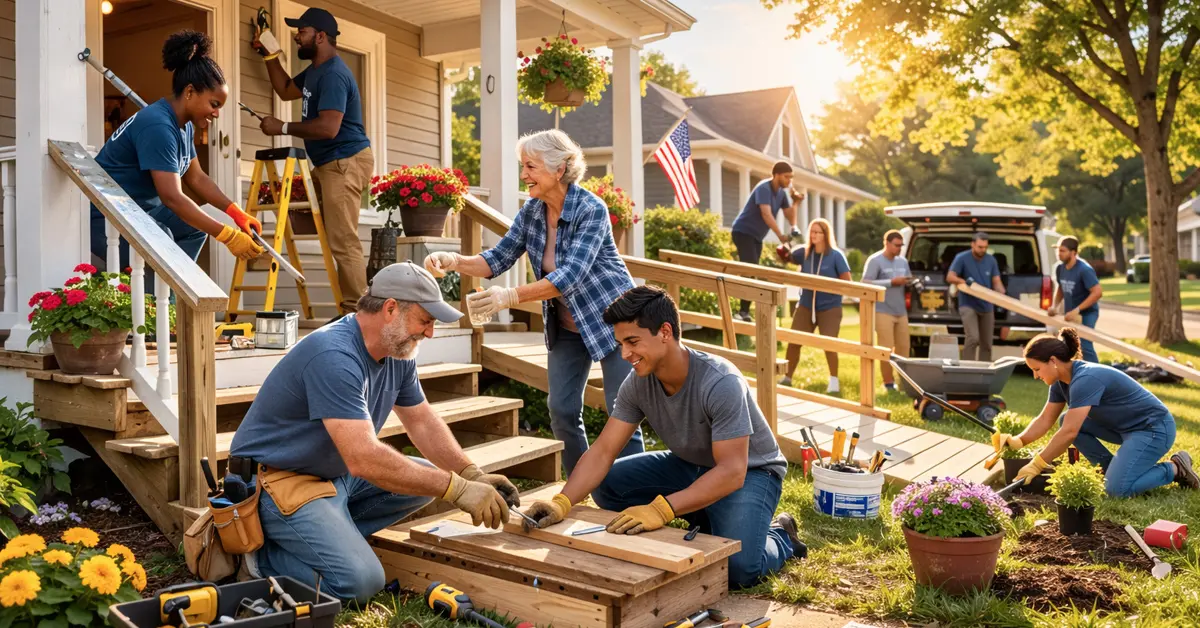

Let’s be honest. Most of us have at least one project we’ve been meaning to get to for months. The overgrown flower bed. The garage that no longer fits a car. The stack of supplies that somehow multiplies overnight. The rotting leaves in the gutters on the house… well, no one wants to think about that.
Here’s a thought: what if your unfinished chore list isn’t just a to-do problem? What if it’s a Go Forth opportunity?
Hiring neighborhood kids for small jobs isn’t just practical—it’s a simple, powerful way to invest in the next generation, strengthen relationships, and live out our faith in everyday life. And yes—you might finally get those gutters cleaned out too.
MORE THAN CHORES –– IT’S LOVE FOR OUR NEIGHBOR IN ACTION
We talk often about loving our neighbors. But the most meaningful ways to do that rarely require a complicated program, a budget, or a committee.
Many kids and teens in our communities are eager to work. They want spending money, experience, and a chance to prove they can be trusted with responsibility. When you offer a small job—pulling weeds, helping set up an event, organizing supplies—you’re doing more than checking a task off your list. You’re saying: I see you. I trust you. You matter. That kind of encouragement sticks.
WHY KIDS NEED THIS MORE THAN EVER
Today’s young people don’t always have many opportunities for real-world responsibility. When adults create small chances to work, it helps them learn things that no app, class, or lecture can teach:
-
-
Showing up on time
-
Following instructions
-
Doing a job well (even when it’s not fun)
-
Managing money
-
Taking pride in their effort
-
Scripture reminds us that “all hard work brings a profit” (Proverbs 14:23). These small jobs help build not just skills—but character. And character is ministry.
THE HIDDEN BONUS: BUILT-IN MENTORSHIP
Here’s where the real impact happens. When a teenager comes to mow your lawn or help at your nonprofit event, you’ve created something rare—a natural connection between generations. You don’t need a formal mentoring program, when it can simply look like this:
-
-
Asking how school is going
-
Encouraging their goals
-
Thanking them sincerely
-
Offering a quick prayer if appropriate
-
Simply being a safe, kind adult who believes in them
-
Never underestimate what a consistent, encouraging adult presence can mean to a young person.
WHAT CAN THEY ACTUALLY DO?
More than you think.
Younger kids (8–12)
-
-
Pull weeds
-
Sweep patios or sidewalks
-
Sort supplies
-
Help with simple event prep
-
Teens (13–16)
-
-
Lawn mowing or yard cleanup
- Shovel drive and walk ways
-
Babysitting (if ready)
- Dogsitting
-
Cleaning or organizing storage areas
-
Helping with basic tech or social posts
-
Older teens (16+)
-
-
Event setup and cleanup
-
Office or administrative help
-
Painting or light maintenance
-
Property care for your nonprofit or ministry space
-
If it’s been sitting on your to-do list for months, chances are it’s perfect.
DO IT THE RIGHT WAY
To make the experience positive and meaningful:
-
-
Pay fairly. Generosity teaches value.
-
Set clear expectations. Kids do better when they know what success looks like.
-
Involve parents and communicate with them. Especially for younger workers.
-
Keep it safe and age-appropriate.
-
Encourage them. A genuine “You did an awesome job” can mean even more than the paycheck.
-
IMAGINE THE RIPPLE EFFECT
What if every household or member in CORAC hired just one neighborhood student this season? We’d see:
-
-
Kids gaining confidence and responsibility
-
Families feeling supported
-
Stronger community relationships
-
A culture of opportunity and encouragement
-
And from a ministry perspective? You’re modeling stewardship, generosity, dignity of work, and Christ-like care—without launching a single new program. Sometimes the most powerful outreach isn’t an event. It’s a rake, a broom, and a conversation.
A SIMPLE CHALLENGE IN YOUR NEIGHBORHOOD
This month:
-
- Look around your neighborhood, church, or ministry network.
- Identify one young person who might benefit from a small job.
- Offer a simple opportunity.
- Take a moment to encourage them—and, if appropriate, pray for them.
Small acts, repeated across a community, create big impact. And who knows? That teenager you hired to pull weeds today might remember your encouragement for years to come. Because when we invest in the kids next door, we’re not just getting chores done. We’re building character. We’re strengthening community. And we’re living out our faith—right where we are.