Walk into any crowd and ask a simple question: “Who here actually knows their neighbors?” A few hands might go up. Ask the follow-up question: “Who has worked together with them to accomplish something meaningful?” The number tends to drop quickly.
Modern life has done something strange to us. We live closer together than ever before, yet somehow manage to live more separately. Neighborhoods exist, but communities often don’t. People share zip codes but rarely share purpose. We pass each other in grocery stores, wave politely while backing out of driveways, and then retreat into our own little worlds.
And yet, every so often, something happens that reminds us how quickly that can change.
Sometimes all it takes is someone asking for help.
Beautification Day
This past week, the president of our local school board handed me a problem. The local high school had scheduled a Beautification Day for Saturday, March 14, an effort designed to overcome some budget shortfalls by cleaning up the campus and showing the community that people care about the place where local students spend so much of their time. It was meant to be a day where volunteers could roll up their sleeves and help give the school a little attention and pride.
Unfortunately, the timing wasn’t ideal. Spring break had arrived, and participation was looking awfully meager. With the date fast approaching, it was becoming clear that without more volunteers, the effort might struggle to accomplish much, if anything.
A CORAC’er Steps Up
So I made a few quick phone calls to two of the local Catholic parishes I attend, as well as a large non-denominational Christian church in the area. The request was simple: if anyone had time and was willing to help, we would be eternally grateful. That might seem like a big ask, with less than forty-eight hours’ notice.
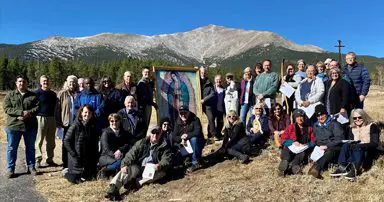
What happened next was encouraging in the best possible way. About sixty people showed up!
They didn’t come because it was convenient. They didn’t come because there had been some big publicity campaign or a carefully orchestrated volunteer drive. They came because someone asked and the need was real. When people of goodwill hear that their community could use a hand, they tend to respond.
And Respond They Did
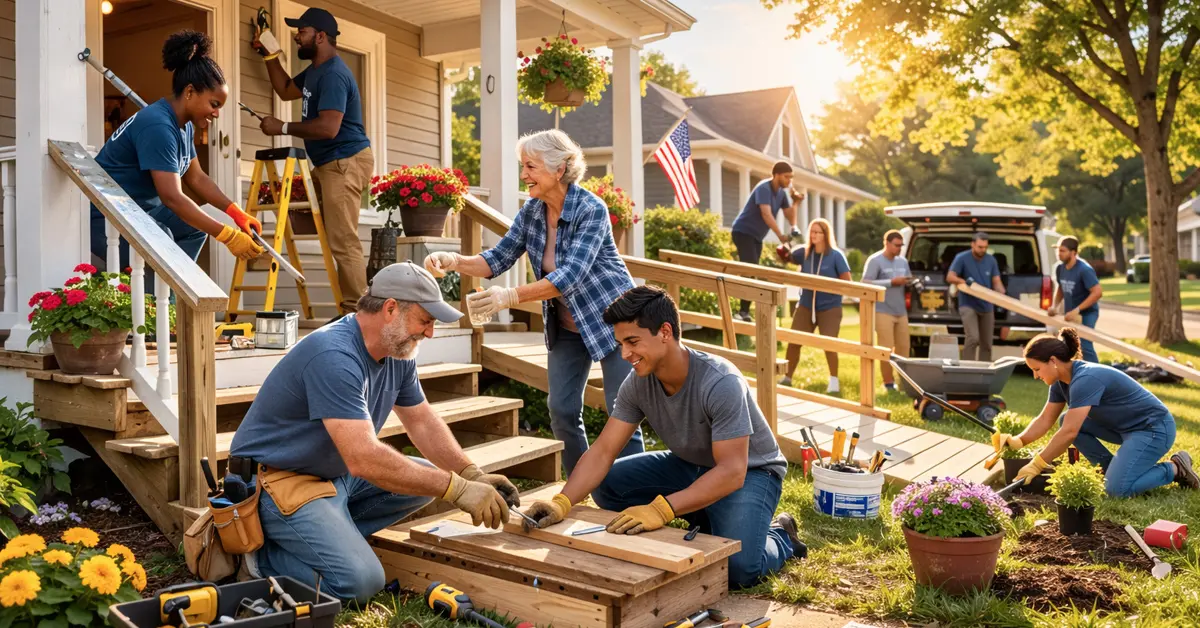
The work itself was not glamorous, but it was exactly what the campus needed. Volunteers spent the morning power washing buildings and sidewalks, removing layers of grime and what could only be described as a heroic amount of chewing gum. Windows were scraped clean of old stickers and graffiti and then washed until they actually shined again. Curbs and stair edges received fresh coats of safety yellow paint. Weathered wooden benches were repainted, rust was removed from outdoor tables, and common areas were swept clean.
Around the grounds, volunteers filled holes in the landscaping and planted new trees and cacti. Bit by bit, the campus began to look like a place people truly cared about again.
That may sound like a small thing, but it isn’t. When a school looks clean and maintained, it quietly communicates something important to students and families alike. It says that this place matters. It says that the community values the environment where its young people spend their days.
The effort didn’t stop with volunteers either. We also reached out to some local businesses, and they stepped up to help. Free supplies showed up by the truckload: cleaning materials, landscaping tools, paint, brushes, and other stuff needed to tackle the work. Power washers arrived. Plants and landscaping materials were donated. Before long, the crew had everything they needed to make some meaningful progress.
Feed My Sheep
And then came the food.
Anyone who has spent time around volunteer work knows that a well-fed crew is a happy crew. Charity can be a hungry business. The morning was fueled with donuts and breakfast burritos loaded with all the trimmings, which may very well be one of the most reliable ways ever discovered to build instant camaraderie among people who have just met.
By the end of the morning, the campus looked noticeably better. Paint was fresh, sidewalks were clean, and the grounds had new life. But the most important thing that happened that day had very little to do with paint or power washers.
People who had never met before spent hours working side by side. They shared tools, traded stories, and laughed together. Strangers became acquaintances, and acquaintances became friends. Something quietly powerful took place: a group of individuals became, at least for a few hours, a real community.
Modern culture sometimes suggests that people are selfish or apathetic, that no one is willing to help unless there’s something in it for them. But real life has a way of disproving that theory again and again. When a genuine need appears and people are invited to be part of the solution, they often step forward with surprising generosity.
Most people actually want to contribute to something meaningful. They want to know their time and effort matter. What they often lack is simply the invitation.
Saturday morning provided it.
Culture is often discussed as if it were shaped only by big institutions, sweeping policies, or national movements. But more often than not, culture is built in moments that look much smaller than that. It’s built when neighbors work together. It grows when people give their time to improve the place they share. It strengthens when communities rediscover the simple act of showing up for each other.
That is exactly what happened on Beautification Day.
Takeaway
The lesson from the day isn’t complicated. When people of goodwill are invited to do something worthwhile together, they usually say yes. They bring their time, their energy, their generosity, and sometimes even their tools. And if someone happens to bring breakfast burritos along the way, well, that doesn’t hurt either.
Because when people work together for the good of others, something deeper begins to take root. They are reminded that they are not just individuals passing through the same place. They are part of something larger.
And that realization has a quiet but powerful way of strengthening a community—one “Go Forth” Saturday morning at a time.