Catch the highlights. Join the crew.

Signal moves quickly, especially when you join a conversation already in progress. Go Forth Field Notes gathers selected challenges, practical ideas, helpful exchanges and member experiences from the CORAC Go Forth Signal group in one convenient place.
It isn’t a substitute for the full Signal conversation—it’s a window into it. Catch the highlights here, then join us on Signal for the ongoing discussion and the greater privacy it provides. Most importantly, step away from the screen occasionally and put something into practice. Go Forth is not about collecting good intentions. It’s about taking the next right step.
Back to Fundamentals
Welcome to Our Go Forth Group

This group exists for one purpose: to put CORAC’s mission into motion.
The spirit of Go Forth runs through everything CORAC does, including our specialty teams. But this channel is for a specific kind of action: practical efforts that bring people together, meet local needs and help rebuild our homes, neighborhoods, parishes and communities around faith, family and freedom.
Share a project, invite others to help, report what’s working or suggest a simple deed someone else can run with. Save health advice, preparedness information, prayer resources and other specialized efforts for the appropriate team channels, where people can find them—and where they belong.
Big projects are welcome, but so are small things that build trust, strengthen relationships and help create the kind of community we want to live in.
Completed something? Planned something? Still negotiating with the couch? Tell us your next Go Forth.
The Fundamentals

Vince Lombardi would famously begin the first team meeting of the season by holding up a football and telling his professional players, “Gentlemen, this is a football.”
They obviously knew what it was. His point was that excellence begins by returning to the fundamentals and nobody becomes so experienced that the fundamentals are beneath them.
Go Forth begins the same way.
More Fundamentals

Many of us have served our families, churches and communities for decades. Some are just getting started. Either way, rebuilding community begins with the person God has placed directly in front of us.
Can we notice that person? Learn a name? Listen without lecturing? Discover what’s needed? Make a specific offer–and follow through?
Learn Something About Someone

Your first stretch: introduce yourself to one person who lives near you but whom you really don’t know. Learn their name and one thing about them.
Don’t mention CORAC, explain the state of civilization or recruit them for anything. Just have a good-old-fashioned human conversation.
Come back afterward with “Done” and tell us something you learned if you feel the need to.
Yeah, it’s painfully basic. That’s where professionals begin.
Okay, What's With the Squirrels?

Glad you asked.
Squirrels are remarkably good at a few things we care about at CORAC.
They prepare before the need arises. They’re energetic, persistent, adaptable, resourceful, and surprisingly good at navigating complicated environments.
They also understand something we tend to forget: small actions–repeated consistently–add up.
One acorn isn’t much. Neither is one edifying conversation, one small act of charity, or twenty minutes spent sharing something useful.
But keep going. Eventually, you’ve built something.
So yes, the squirrel has become something of a mascot around here—a small reminder to pay attention, prepare well, keep moving, and take the next right step.
Also, squirrels are funny.
Not everything needs a theological explanation.
Nobody Is Too Experienced to Trip Over a Tire

Some members are new to this kind of work. Others are old pros. But experience doesn’t make the fundamentals unnecessary—and activity doesn’t automatically equal accomplishment.
These early exercises may appear simple. That is intentional. They help all of us examine how well we notice people, initiate contact, listen, follow through and invite others into meaningful action.
The rookie learns the fundamentals.
The veteran discovers whether his fundamentals are still sound.
Who Else Has Been Doing Go Forth Stuff?
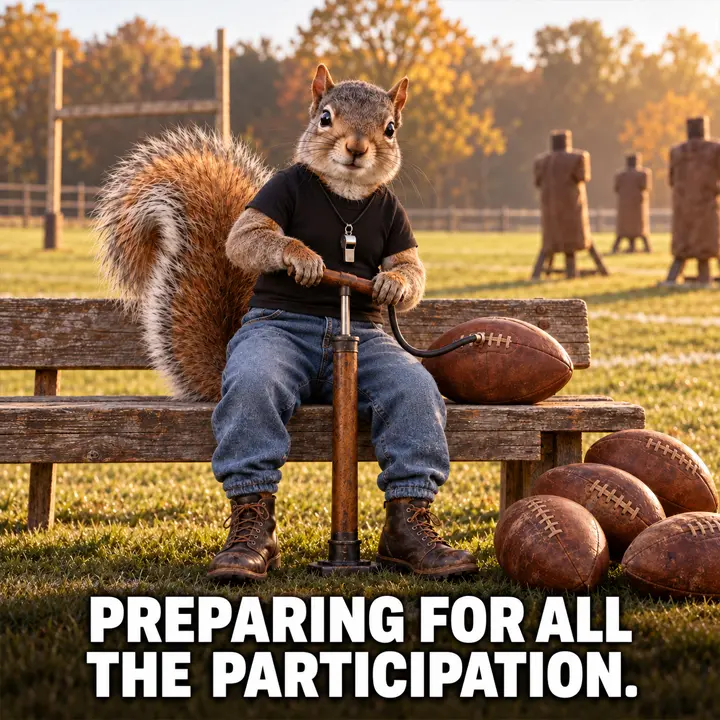
I’ve done most of the posting so far because somebody had to inflate the footballs.
If you haven’t spoken up yet, feel free to share in one or two sentences:
What’s one Go Forthy thing you’ve done recently that someone else could copy?
Nothing heroic required. Small and finished beats impressive and still being discussed.
Make the First Move
Put It on the Calendar

Your next Go Forth Job: Turn one good intention into an actual appointment.
Choose someone you know in need and offer one small, specific form of help. Replace “Let me know if you need anything” with something like, “I can take care of that loose gate hinge Saturday at ten.”
Nothing heroic. Pick something useful, manageable and close at hand. If the person accepts, show up and finish it. If they decline, you still practiced making the first move.
Report back with “On the calendar” or “Job done.”
Nothing frightens a vague promise like an actual time and date.
Saturday at Ten

A specific offer is easier to accept: “Can I fix that gate Saturday morning?”
No speeches. No grand rescue operation. Just one clear offer from one neighbor to another.
Once they say yes, put it on the calendar.
“Soon” has swallowed more good intentions than anyone can count. Give yours a fighting chance.
The Rarest Tool
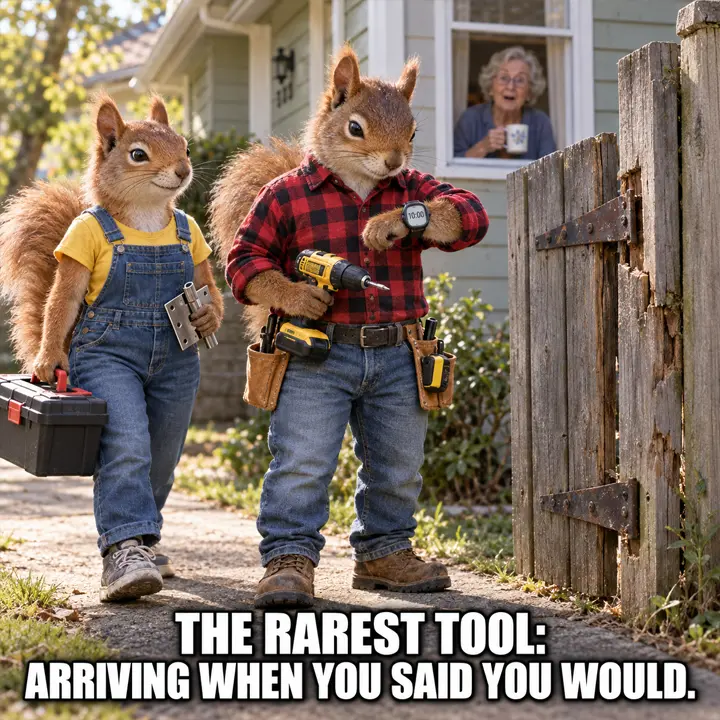
The difficult part usually isn’t owning the right drill. It’s showing up as promised.
Reliability may not look heroic, but it builds trust one appointment at a time.
High Five

Finish the job, clean up the mess and enjoy the small victory.
You didn’t save the world. You made one corner of it work better—and that is how rebuilding begins.
Make One Honest Ask
Recognize the Burden

Choose one burden someone else could make a little lighter for you. Not your entire life story—just one place where another person could help.
Make One Honest Ask

Your next Go Forth job: ask one trusted person for one small, specific form of help.
Maybe you need a ride, an errand run, company at an appointment, help sorting paperwork, a patient hand with technology or simply someone to sit down and listen for a while.
Choose something real and manageable. Then ask plainly. No vague hints, brave little sighs or hoping someone notices your increasingly dramatic struggle.
If the person agrees, let them help—and receive it graciously. Asking is not weakness. It gives another person the opportunity to show up.
Report back with “I asked” or “Someone showed up.”
Community begins when we stop pretending only other people need it.
Start Small

A ride, an errand, a second opinion or twenty minutes of company is enough. Small asks give relationships somewhere to begin.
Let Them Help

Receiving graciously is part of the assignment. Say thank you, release the bag and resist supervising every step.
Complete the Circle

Needing help does not remove you from the community. It brings someone closer—and may open the door for you to help them later.
Make the Connection
Take Inventory

Not every Go Forth requires a strong back, a pickup truck or an unused Saturday. Some require experience, good judgment and the willingness to make one phone call. The people you have come to know over a lifetime may be one of the most useful resources you can offer.
Your next Go Forth job: help one real need find one possible helper.
Maybe a student needs tutoring, a young family needs baby supplies, a recovering neighbor needs someone to walk the dog, a community project needs volunteers or a local organization could use a few hours of bookkeeping advice. Think about the people you know—children, grandchildren, nieces, nephews, neighbors, parishioners and former coworkers. Who might be able to help?
You do not have to provide the solution yourself—or even know the perfect person. Ask someone who might know someone. Get permission, make the introduction and help settle the next step.
You are not responsible for solving everything—only for helping the right people find each other. Forwarding a link does not count. Neither does announcing that “somebody should really do something.”
Report back with “Connection made” or “Next step set.”
Community often begins with four simple words: “You two should talk.”
Think One Person Beyond

You may not know the right person, but someone in your circle might. One thoughtful phone call can make your network considerably larger without adding a single contact.
Make the Introduction

A community project may already have the idea, the people and the supplies—but no way to move them. Sometimes progress begins when someone remembers who owns the van.
Step Aside Gracefully

Once the right people are connected, let them get to work. You do not have to lift every box—or offer detailed advice about how boxes were lifted in 1973.
Close the Loop

Check back to make sure the introduction became a conversation and the conversation became a next step. This is follow-through, not meddling—assuming you stop before the third call.
Do It In Tandem
The Next Job
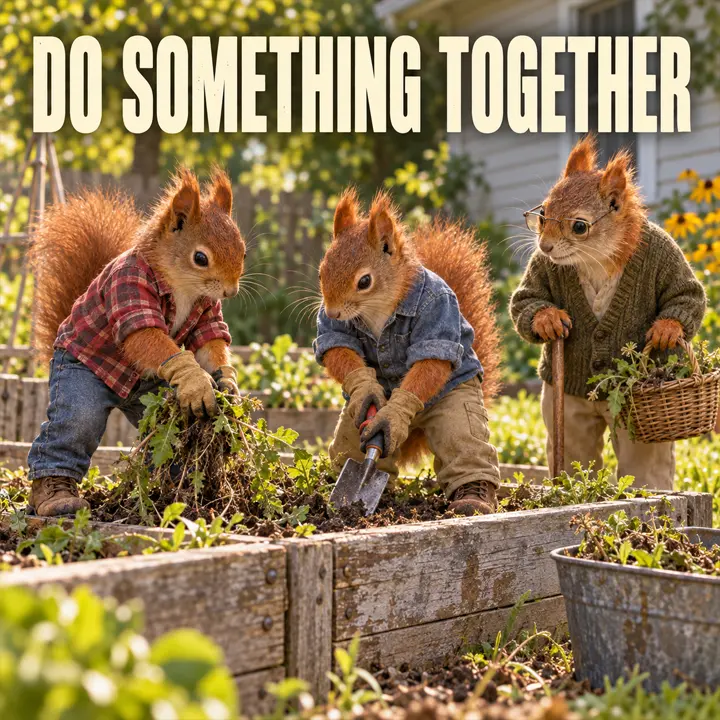
Your next Go Forth job: choose one small, useful task and invite someone to do it with you.
Help a neighbor clean up a yard, prepare a meal, repair something or tackle a project that has been waiting patiently for civilization to recover. Keep it manageable, choose a time and work side by side.
The task matters—but so does what happens while you are doing it. Shared work turns acquaintances into teammates and gives a new relationship somewhere to go.
Report back with “Crew assembled” or “Job done.”
Nothing builds community quite like discovering who brought the wrong screwdriver.
An Invitation
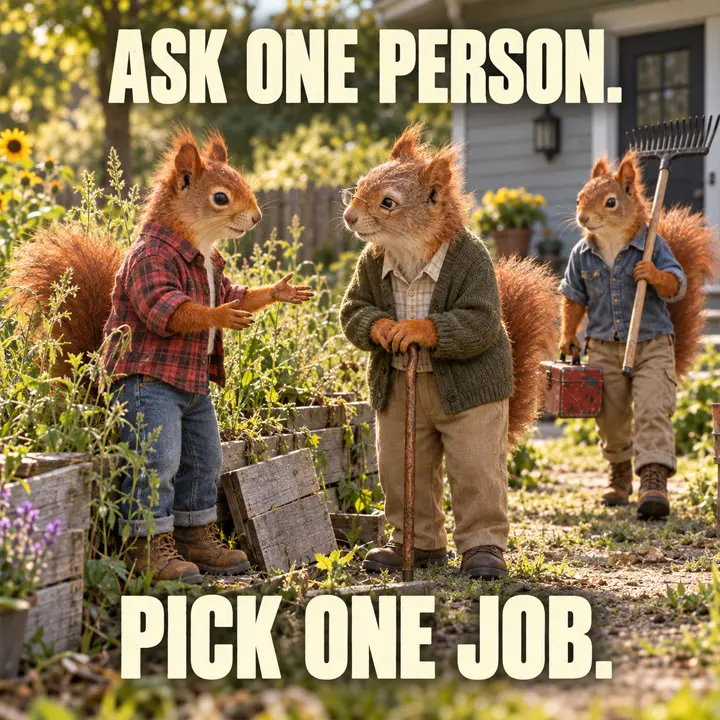
A personal invitation gives someone a clear way to step in. One person and one useful job are enough—matching T-shirts can wait.
Let the Work Build the Relationship

Working beside someone creates room for conversation and trust. It may even produce something rarer: a finished job.
Keep the Win Within Reach
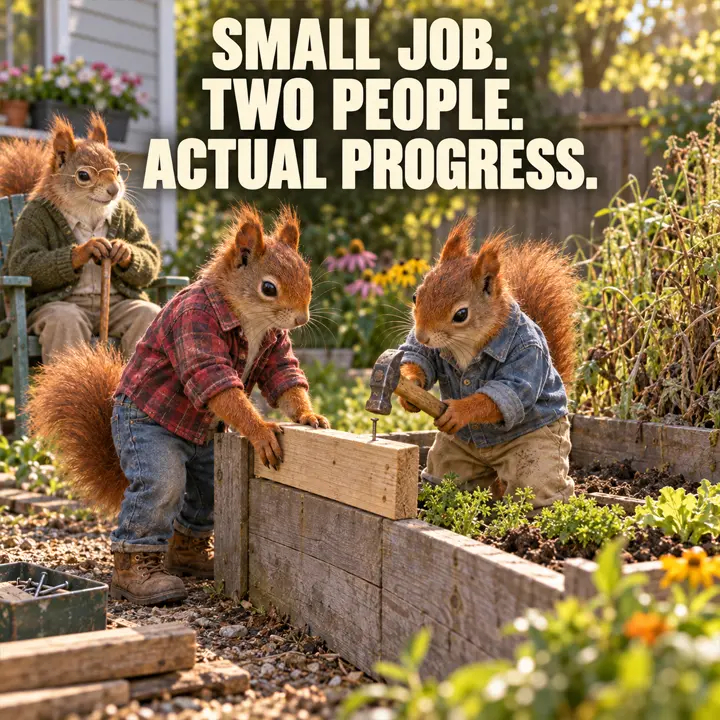
A shared effort does not have to be ambitious. Start small—the neighborhood renaissance can wait until after lunch.
Useful Beats Perfect

Perfect skills and equipment are not required. Bring what you have—even if what you have is clearly a pipe wrench.
Turn Go Forth Into Friendship
Come Back Around

Complete the fundamental path: reconnect with someone from one of your earlier efforts.
Check on the neighbor you met, the person you helped or the one who helped you. Ask how things are going, see whether the repair is holding or simply stop by for another conversation. You do not need a new project or an especially clever reason.
The point is to keep a good encounter from becoming a one-time event. Relationships grow when people discover that you meant to stay connected.
Report back with “Came back around.”
Community rarely arrives with a grand opening. More often, somebody just shows up again.
The Person Was Always the Point

A finished job may give you a reason to return, but the relationship is what brings you back. Check the planter box if you must—then ask how your neighbor is doing.
Make Room for the Visit
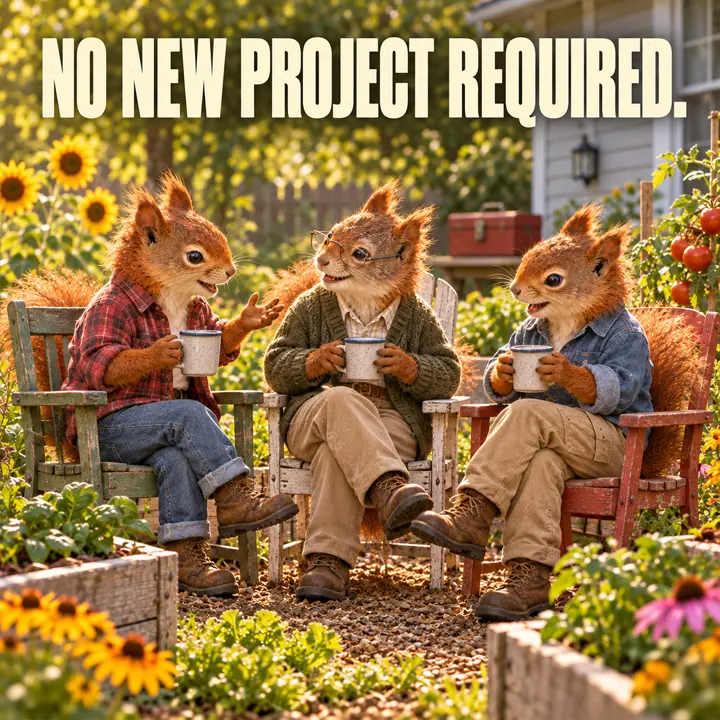
You do not need another problem to solve every time you stop by. Sometimes sitting down with a cup of coffee is the useful thing.
Carry the Conversation Forward

Remembering one small detail tells someone the earlier conversation mattered. It also saves both of you from discussing the weather again.
Let Help Travel Both Ways

Coming back gives the other person an opportunity to contribute, too. Community becomes real when nobody is permanently assigned the role of “person in need.”
Trailhead Review
Return and Tell What Happened
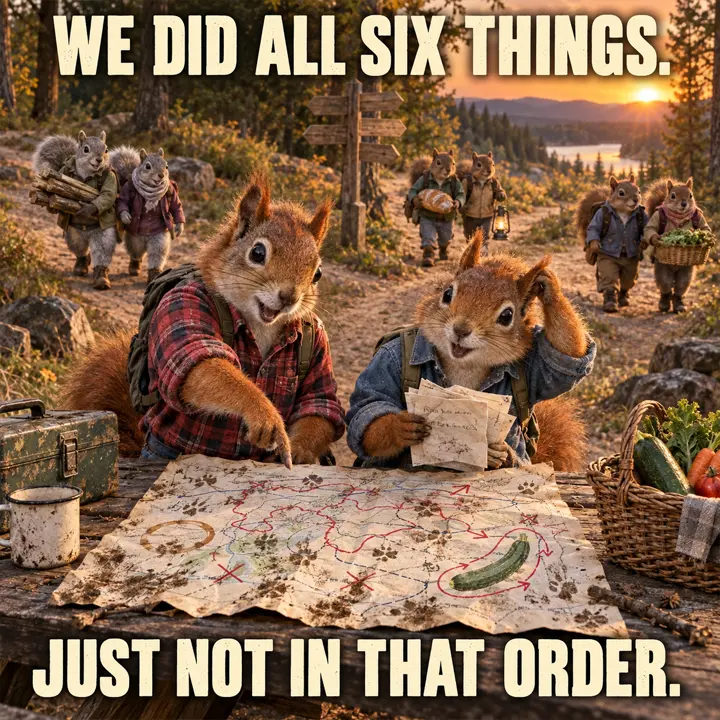
The seventy-two returned to Jesus with joy and told Him what had happened. Before choosing your next trail, do the same.
Look back over the six fundamentals. Who did you meet? Where did help move in either direction? What connection continued—and what surprised you?
Share one brief story with the group. It does not need to be dramatic, polished or accompanied by uplifting background music. Just tell us what you tried and what came of it.
Then consider where you may be called next: gathering people, strengthening neighborhood ties, sharing skills, meeting local needs or building preparedness.
Report back with “Here’s what happened…”
Before choosing the next trail, notice where your feet have already taken you.
Know Who You Have
From Movement to Momentum

The Trailhead helped us practice the basic movements of Go Forth. The Rally Trail teaches us how to turn those individual movements into a group habit.
The goal is not to launch an impressive program. It is to know your people, bring a few of them together around useful work and keep doing it until cooperation becomes normal.
Make the Calls

Your next job: find out who is actually within reach —and learn something useful about them.
Choose five and contact each one personally. Ask what skills, experience or connections they could contribute, what limitations they currently face and where they might need a hand themselves.
Don’t recruit them for a grand initiative or conduct a forty-seven-question regional census. Have a real conversation and take a few useful notes. You’re looking for people, possibilities and needs that a list cannot show you.
Report back with “Five contacted” and one thing you discovered about your group.
A list is not a crew. At this stage, it’s mostly names arranged alphabetically.
Find the People Behind the Names
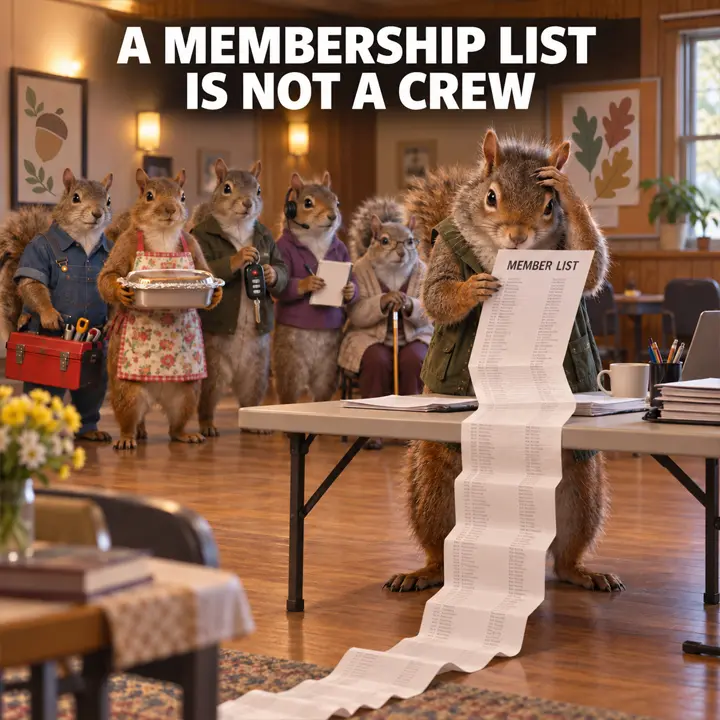
Names and contact information tell you who might be up for it. A personal conversation reveals the skills, limitations, connections and needs that could turn those names into a working group.
Replace Guesswork With Conversation
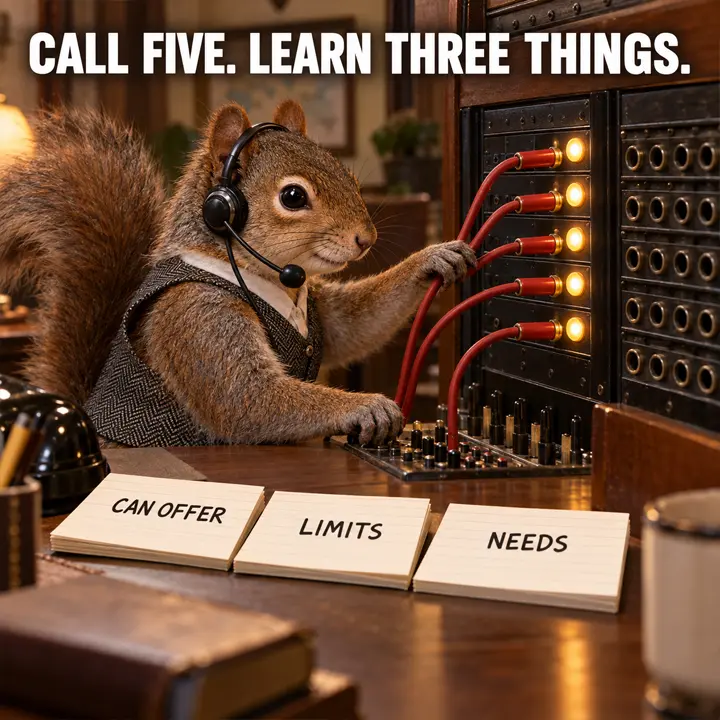
Contact five people personally. Learn what each can offer, what limits they face and where they might need support. No regional master plan required—just five worthwhile conversations.
Curiosity Before Clipboard

You’re getting to know a person, not completing an intake form. Ask a few good questions, listen carefully and take enough notes to remember what matters.
Never Underestimate the Quiet One

Turns out your neighborhood has a broomball walk-on fueled by Icy Hot and pure determination.
Ask Someone, Not Everyone
From Announcement to Invitation

A general appeal can reach fifty people without actually reaching anyone. Everyone assumes somebody more qualified, less busy or suspiciously enthusiastic will step forward.
A crew begins when an announcement becomes a personal invitation.
Ask Them for a Reason

Connect the request to something you learned about the person:
“You mentioned that you enjoy talking with people. Would you call these three members?”
That tells them you noticed what they can contribute—and that your first conversation was not merely paperwork with better manners.
Give the Ask Some Edges

“Could you help with outreach?” is fog.
“Could you call these three members by Friday and tell me what you learn?” gives the person a clear task, a finish line and enough information to answer.
Keep the First Yes Small

Don’t make the first request sound like they’re inheriting a department.
Ask for one useful, manageable contribution that fits their time and ability. A small success makes another yes much easier.
Make It Safe to Say No

A personal ask should be direct without becoming pressure wrapped in fellowship.
Let the person answer honestly. A no protects the relationship, teaches you something useful and helps you make a better match next time.
Make One Real Ask

Your next job: choose one of the five people you contacted and invite that person into one specific, manageable role.
Explain what you are asking, why you thought of them, how much time it should take and when it needs to be completed. Then let them answer.
Report back with “Ask made”—and, if they accept, name the next step.
“We need help” is easy to ignore. “Could you do this?” deserves an answer.
Start With a Winnable Job
Give the Crew Something to Do

You’ve made the calls and invited someone to help. Now give that willingness somewhere to go.
Choose a real need that a few people can tackle together. A crew becomes a crew through shared work. Otherwise, you’ve assembled another group of people wondering what happens next.
We already have plenty of those.
Pick Something That Matters

Help a family tackle an overdue repair. Arrange a practical training session with a CORAC specialty team. Get a few neighbors together to check on homebound residents before severe weather.
Choose something that leaves people better off when you’re finished.
The first job should be manageable, but meaningful enough to be worth showing up for.
Make the Finish Line Visible

“Let’s build local preparedness” could keep everyone talking until spring.
“Let’s arrange one emergency communications practice with three households this month” gives the crew something it can complete.
Be able to say plainly what you’re doing, who it will help and what finished looks like.
Clear the Path Before Saturday
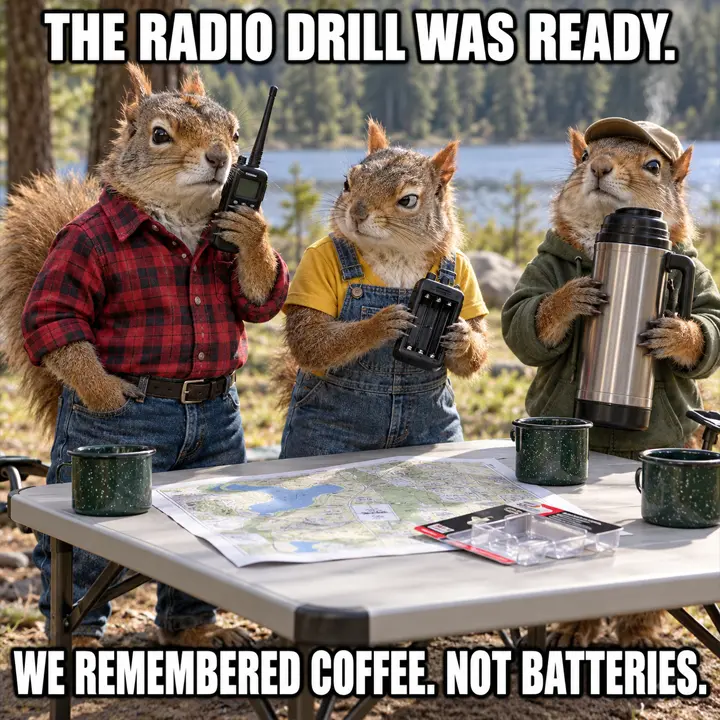
Confirm the time, place, permission, supplies and any help or expertise you’ll need.
A little preparation protects people’s willingness to come back.
Nothing takes the shine off volunteering like arriving ready to work and discovering your assignment is to watch someone look for an extension cord.
Let the First Win Open a Door

Finish the job, thank the people who helped and notice what the work revealed.
Did someone show an unexpected skill? Did another need become clear? Could this effort become something you do regularly?
An early success gives people confidence to take on more. Let it lead somewhere.
Put One Job In Motion

Your next Go Forth job: choose one useful task that two or three people can complete together. Set the date, confirm what’s needed and make sure everyone knows the finish line.
Report back with “First job set”—then “Job finished,” with one sentence about what it accomplished.
Start with a job you can finish. Build a crew that’s ready for the next one.