Catch the highlights. Join the crew.

Signal moves quickly, especially when you join a conversation already in progress. Go Forth Field Notes gathers selected challenges, practical ideas, helpful exchanges and member experiences from the CORAC Go Forth Signal group in one convenient place.
It isn’t a substitute for the full Signal conversation—it’s a window into it. Catch the highlights here, then join us on Signal for the ongoing discussion and the greater privacy it provides. Most importantly, step away from the screen occasionally and put something into practice. Go Forth is not about collecting good intentions. It’s about taking the next right step.
Back to Fundamentals
Welcome to Our Go Forth Group

This group exists for one purpose: to put CORAC’s mission into motion.
The spirit of Go Forth runs through everything CORAC does, including our specialty teams. But this channel is for a specific kind of action: practical efforts that bring people together, meet local needs and help rebuild our homes, neighborhoods, parishes and communities around faith, family and freedom.
Share a project, invite others to help, report what’s working or suggest a simple deed someone else can run with. Save health advice, preparedness information, prayer resources and other specialized efforts for the appropriate team channels, where people can find them—and where they belong.
Big projects are welcome, but so are small things that build trust, strengthen relationships and help create the kind of community we want to live in.
Completed something? Planned something? Still negotiating with the couch? Tell us your next Go Forth.
The Fundamentals

Vince Lombardi would famously begin the first team meeting of the season by holding up a football and telling his professional players, “Gentlemen, this is a football.”
They obviously knew what it was. His point was that excellence begins by returning to the fundamentals and nobody becomes so experienced that the fundamentals are beneath them.
Go Forth begins the same way.
More Fundamentals

Many of us have served our families, churches and communities for decades. Some are just getting started. Either way, rebuilding community begins with the person God has placed directly in front of us.
Can we notice that person? Learn a name? Listen without lecturing? Discover what’s needed? Make a specific offer–and follow through?
Learn Something About Someone

Your first stretch: introduce yourself to one person who lives near you but whom you really don’t know. Learn their name and one thing about them.
Don’t mention CORAC, explain the state of civilization or recruit them for anything. Just have a good-old-fashioned human conversation.
Come back afterward with “Done” and tell us something you learned if you feel the need to.
Yeah, it’s painfully basic. That’s where professionals begin.
Okay, What's With the Squirrels?

Glad you asked.
Squirrels are remarkably good at a few things we care about at CORAC.
They prepare before the need arises. They’re energetic, persistent, adaptable, resourceful, and surprisingly good at navigating complicated environments.
They also understand something we tend to forget: small actions–repeated consistently–add up.
One acorn isn’t much. Neither is one edifying conversation, one small act of charity, or twenty minutes spent sharing something useful.
But keep going. Eventually, you’ve built something.
So yes, the squirrel has become something of a mascot around here—a small reminder to pay attention, prepare well, keep moving, and take the next right step.
Also, squirrels are funny.
Not everything needs a theological explanation.
Nobody Is Too Experienced to Trip Over a Tire

Some members are new to this kind of work. Others are old pros. But experience doesn’t make the fundamentals unnecessary—and activity doesn’t automatically equal accomplishment.
These early exercises may appear simple. That is intentional. They help all of us examine how well we notice people, initiate contact, listen, follow through and invite others into meaningful action.
The rookie learns the fundamentals.
The veteran discovers whether his fundamentals are still sound.
Who Else Has Been Doing Go Forth Stuff?
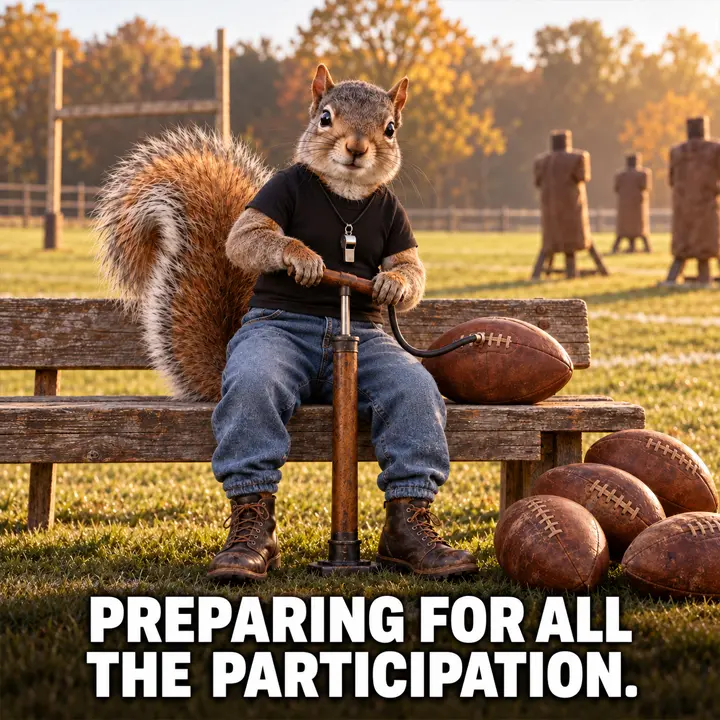
I’ve done most of the posting so far because somebody had to inflate the footballs.
If you haven’t spoken up yet, feel free to share in one or two sentences:
What’s one Go Forthy thing you’ve done recently that someone else could copy?
Nothing heroic required. Small and finished beats impressive and still being discussed.
Make the First Move
Put It on the Calendar

Your next Go Forth Job: Turn one good intention into an actual appointment.
Choose someone you know in need and offer one small, specific form of help. Replace “Let me know if you need anything” with something like, “I can take care of that loose gate hinge Saturday at ten.”
Nothing heroic. Pick something useful, manageable and close at hand. If the person accepts, show up and finish it. If they decline, you still practiced making the first move.
Report back with “On the calendar” or “Job done.”
Nothing frightens a vague promise like an actual time and date.
Saturday at Ten

A specific offer is easier to accept: “Can I fix that gate Saturday morning?”
No speeches. No grand rescue operation. Just one clear offer from one neighbor to another.
Once they say yes, put it on the calendar.
“Soon” has swallowed more good intentions than anyone can count. Give yours a fighting chance.
The Rarest Tool
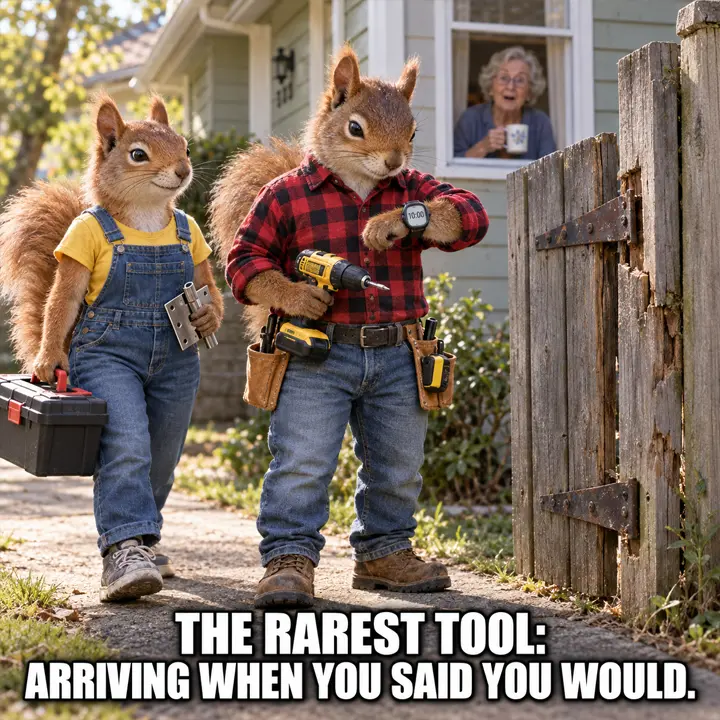
The difficult part usually isn’t owning the right drill. It’s showing up as promised.
Reliability may not look heroic, but it builds trust one appointment at a time.
High Five

Finish the job, clean up the mess and enjoy the small victory.
You didn’t save the world. You made one corner of it work better—and that is how rebuilding begins.
Make One Honest Ask
Recognize the Burden

Choose one burden someone else could make a little lighter for you. Not your entire life story—just one place where another person could help.
Make One Honest Ask

Your next Go Forth job: ask one trusted person for one small, specific form of help.
Maybe you need a ride, an errand run, company at an appointment, help sorting paperwork, a patient hand with technology or simply someone to sit down and listen for a while.
Choose something real and manageable. Then ask plainly. No vague hints, brave little sighs or hoping someone notices your increasingly dramatic struggle.
If the person agrees, let them help—and receive it graciously. Asking is not weakness. It gives another person the opportunity to show up.
Report back with “I asked” or “Someone showed up.”
Community begins when we stop pretending only other people need it.
Start Small

A ride, an errand, a second opinion or twenty minutes of company is enough. Small asks give relationships somewhere to begin.
Let Them Help

Receiving graciously is part of the assignment. Say thank you, release the bag and resist supervising every step.
Complete the Circle

Needing help does not remove you from the community. It brings someone closer—and may open the door for you to help them later.