
WHAT YOU’LL LEARN
You’ve spent decades building for others. Now build something that’s actually yours.
You plan vacations more carefully than your life. You research hotels for weeks but won’t ask: What am I actually here to do?
Lectio Vitae – The Mindset Series | Episode 7: The Purpose-Driven Approach
At 40-75+, you’re at the inflection point. Enough experience to see what matters. Enough time to act on it.
But when everything is possible, nothing is urgent. You drift. Decades pass.
Your purpose is where three things intersect: what enrages you, what makes you lose time, and what you’d do without permission.
That overlap is your actual calling. The rest is just showing up. Tuesday at 3 PM. Tired. Unnoticed. Hard. Doing it anyway.
You’ve already learned focus, discipline, perseverance, adaptability, growth, and emotional intelligence. Now point all of it at something that’s actually yours.
Welcome to the capstone talk in the Lectio Vitae series—where your remaining years become your most meaningful ones.
LISTEN TO THE EPISODE 7
The Purpose-Driven Approach
INTRODUCTION
You know what’s funny? Most people spend more time planning their annual vacation than they spend planning their entire life. We’ll research hotels for three weeks but won’t spend three minutes asking ourselves, ‘What am I actually here to do?'”
Welcome back to Lectio Vitae, where we turn life into an easy-to-understand chat instead of a confusing word salad.
Think about that for a second. You’ll obsess over thread count on Egyptian cotton. You’ll compare flight times down to the minute. You’ll read reviews of a restaurant you’ll visit once. But your actual existence? Your actual contribution to the world? That gets whatever’s left over after work and obligations and the endless scroll. This isn’t laziness. This is a category error.
We treat the temporary as urgent and the permanent as optional. And if you’re anywhere between 40 and 75, or even beyond, this hits differently than it does for a 25-year-old. Because you’re at an inflection point. You’ve got enough experience to see patterns. You’ve got enough time left to actually do something about them. You’re old enough to know better and young enough to still make a difference. You’re at the exact moment where purpose matters most.
The Smartphone Problem
Albert Einstein once said, “The important thing is not to stop questioning. Curiosity has its own reason for existing.” But here’s what he didn’t say: “Curiosity without direction is just expensive distraction.”
Too many of us are like smartphones with every app installed but no WiFi connection—technically capable of everything, practically useful for nothing.
You’ve got skills. You’ve got experience. You’ve got credibility. You’ve got options. And that’s the problem. By 40, you’ve spent two decades building expertise in something. You know how to navigate systems. You understand people. You’ve solved problems. You’ve built things. You’ve failed and learned from it. You’ve succeeded and learned from that too.
But now? Now you’re looking at the next 25-30 years and asking: “What do I actually want to do with this?” You could climb higher in your career. You could change careers entirely. You could get more serious about CORAC. You could travel. You could start a business. You could write that book. You could mentor young people. You could focus on family. You could pursue a passion you’ve neglected. You could do a thousand things. And that’s the problem.
When everything is possible, nothing is urgent. When you could do anything, you end up doing nothing with real commitment. You’re the person who’s “thinking about” a career change at 55. You’re the one with “so many interests” that you’ve committed to none of them. You’re the talented person everyone knows will “figure it out eventually”—which is code for “you probably won’t.”
Einstein didn’t have this problem. Einstein had one question that obsessed him: How does the universe actually work? That singular focus, that purposeful curiosity, is what led to the theory of relativity. Not because Einstein was smarter than everyone else. But because Einstein knew which direction to point his intelligence.
You’ve got decades of intelligence. The question is: which direction are you going to point it?
The Drift Equation
Thomas Sowell, the economist who makes common sense sound radical, reminds us: “The most basic question is not what is best, but who decides what is best.” In other words, you decide. Not your employer. Not your parents. Not the culture. You.
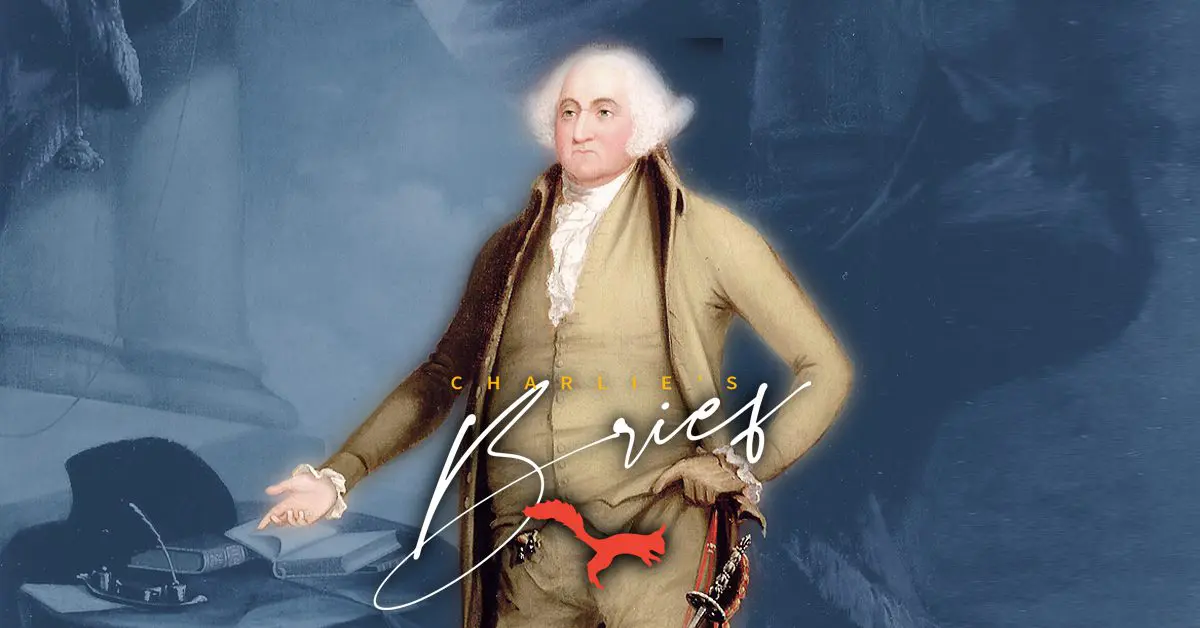
But here’s the catch: If you don’t decide, something else will. John Adams understood this better than almost anyone. Adams wrote: “Facts are stubborn things.” And here’s the stubborn fact: you will drift without direction.
Entropy is free; purpose requires payment. Drift is the default setting of middle age. You wake up. You go to work. You handle obligations. You manage relationships. You scroll. You watch shows. You make plans you don’t keep. You end the day exhausted and uncertain what you actually accomplished.
You do this for 10, 15, 20, 30 years. And suddenly you’re 75 wondering where the time went. That’s not a life. That’s a schedule. Adams didn’t stumble into the American Revolution. He chose it. He aligned his talents (law), his convictions (freedom), and his daily actions (writing, debating, organizing) into a coherent whole.
That alignment is what separated Adams from a thousand other brilliant lawyers who are now completely forgotten. Here’s what’s crucial: Adams did this knowing it would be difficult. Adams knew he’d face opposition. Adams knew he might fail. Adams did it anyway.
That’s the purpose-driven approach: It’s not about being special. It’s about being ordinary. It’s about being intentional. It’s about looking at the time you have left and asking: “How do I want to spend it?” Not in a maudlin way. Not in a “I’m running out of time” panic. But in a clear, honest way: “This is what I believe matters. This is how I’m going to spend my days.”
At 40, you’ve got 25-30 years of work left. At 50, you’ve got 15-20. At 60, you’ve got 5-10. That’s just on average. What you’ve got left at 70+ really boils down to the person, but it’s obviously not infinite. That’s actually quite finite. Which means every year matters. Every decision matters. Every day matters. The question is: Are you going to spend that time on your purpose or on someone else’s?
Saint Jude: The Patron of People Who Think They’re Past Their Prime
Saint Jude is the apostle nobody remembers—which is hilarious because his whole thing is helping people who feel forgotten. He’s the patron saint of hopeless cases, which makes him the perfect guide for anyone who’s ever thought, “Maybe I don’t have anything left to contribute.”
Here’s what we don’t talk about: other than being Jesus’ cousine St. Jude was a complete nobody. He wasn’t Peter (the rock). He wasn’t John (the beloved). He wasn’t even interesting enough to get his own gospel. We have Matthew, Mark, Luke, and John. We have Paul’s letters. We have Peter’s letters. Jude? Jude gets one short epistle that most people have never read.
But that’s exactly the point. Jude’s entire spiritual legacy is built on the radical idea that you don’t have to be famous to be faithful. You don’t have to be remembered to matter. You don’t have to be in the spotlight to be essential.
Jude’s message to people who feel like they’re past their prime, who feel like their best years are behind them, who feel like they’re not enough anymore? “You are not a lost cause. You are a found purpose waiting to be claimed.” Jude understood something radical: your purpose doesn’t have to change the entire world.
Your purpose doesn’t have to be posted on social media. Your purpose doesn’t have to be impressive at the dinner table. Your purpose just has to be true. Jude was an ordinary guy who did extraordinary things by staying faithful to what he believed. Not because Jude was special. But because Jude refused to let ordinariness become an excuse for meaninglessness.
You know what’s interesting? Some of the most purposeful people in history did their best work after 40. Frank McCourt didn’t publish his first book until he was 66. Laura Ingalls Wilder didn’t start her Little House series until she was 64. Ray Kroc didn’t start McDonald’s until he was 52. Vera Wang didn’t enter the fashion industry until she was 40. Julia Child didn’t start cooking professionally until she was 37.
They didn’t think they were too old. They thought they were exactly the right age. And here’s what’s true: They had something that 25-year-olds don’t have. They had perspective. They had experience. They had credibility. They knew what they were doing. That’s not a disadvantage. That’s an asset.
Saint James the Greater: The Activist Who Refused to Sit Still
Now, Saint James the Greater wasn’t sitting around meditating on his navel. He was doing. He traveled. He preached. He challenged systems. He died for what he believed in.
Here’s what’s interesting about James: He wasn’t a scholar. He wasn’t a mystic. He wasn’t even particularly eloquent. James was a fisherman who became an apostle who became a missionary who became a martyr. James was active. That’s his whole thing. And James understood something that most of us have completely backwards: “Faith without works is dead.” (James 2:26)
Your purpose isn’t a feeling. Your purpose isn’t a vision. Your purpose isn’t a dream. Your purpose is a practice. It’s what you do on Tuesday at 3 PM when nobody’s watching and you’re tired and the work is hard and there’s no applause and you do it anyway because it matters. That’s not motivation. That’s conviction.
James spent his entire ministry knowing he’d eventually be martyred. James knew this would end badly. And James did it anyway. Why? Because James believed that what he was doing mattered more than his comfort.
James believed that spreading the gospel was worth dying for. That’s not passion. That’s purpose.
The difference is crucial: Passion is what you feel. Purpose is what you do even when you don’t feel it.
You know what’s interesting about people in their 40s, 50s, and 60s and beyond? You’ve already learned this lesson. You’ve already spent decades doing things that weren’t always fun but mattered anyway. You went to work when you didn’t feel like it. You showed up for your family when you were exhausted. You kept commitments even when circumstances changed. You pushed through difficulty because something mattered more than your comfort.
You already know how to do hard things.
The question is: Are you going to apply that skill to something that you actually choose? Or are you going to spend these years just maintaining the status quo?
The Three Discoveries (Not Decisions)
Here’s where most people get it wrong: They think purpose is something you decide. They think it’s a choice you make in a moment of clarity, like picking a career or a spouse. It’s not.
Purpose is something you discover. It emerges from the intersection of three things:
Discovery One: What Genuinely Enrages You
Not what you think should enrage you. Not what would be impressive to be enraged about. What actually makes your blood boil?
Thomas Jefferson was enraged by tyranny. That rage pointed him toward his purpose. John Adams was enraged by injustice. That rage pointed him toward his purpose. Martin Luther King Jr. was enraged by racism. That rage pointed him toward his purpose.
Your anger is data. It’s telling you what you actually value. It’s showing you where your convictions live.
And here’s what’s true at 40, 50, 60, 70 and beyond: You’ve seen enough to know what actually matters. You’ve seen systems fail. You’ve seen injustice. You’ve seen waste. You’ve seen suffering. You know what’s wrong.
So ask yourself: What injustice have you always been bothered by? What have you seen in your lifetime that you wish had been different? What broken system frustrates you? What suffering do you wish you could have prevented? What waste of human potential makes you angry?
That’s not weakness. That’s a compass. And here’s the beautiful part: You’ve got the experience and credibility to actually do something about it now. You’re not a naive idealist. You’re someone who’s lived long enough to know what you’re talking about. You understand how systems work. You understand people. You’ve navigated difficulty. You’re exactly the person who should be addressing this.
Discovery Two: What Makes You Lose Time
Not what you think you should love. Not what would be impressive to love. What work actually makes you lose track of time?
Einstein lost time in physics. He’d work for hours and it would feel like minutes. That wasn’t discipline. That was alignment. Einstein’s brain was wired for physics the way a lock is wired for a key. When you’re doing work that aligns with your actual wiring, time disappears. You’re not forcing yourself. You’re not motivating yourself. You’re just… doing.
Here’s what’s true at your age: You’ve had decades to figure out what actually engages you. You know what bores you to tears. You know what makes you come alive. You know what kind of work leaves you satisfied instead of resentful. So ask yourself: What parts of your career have you actually enjoyed? Not what paid well. Not what was prestigious.
What parts did you actually like? What problems could you solve for hours without getting bored? What kind of conversation makes you lose track of time? What activity leaves you energized instead of drained? That’s not a hobby. That’s a clue.
And here’s the thing: You don’t have to do it for money. You don’t have to do it for a paycheck or a promotion or someone else’s approval. You can do it because you love it.
That’s a freedom you might not have had before.
Discovery Three: What You’d Do Without Permission
If nobody was watching, if nobody was paying you, if nobody would ever know—what would you still do?
Saint James would still preach. Adams would still argue for freedom. Jefferson would still pursue knowledge. Einstein would still ask questions about the universe. They didn’t need permission. They didn’t need payment. They didn’t need recognition. They needed to do the thing.
That’s the difference between a job and a calling. A job is what you do for money. A calling is what you do because you can’t not do it.
Here’s what’s true at your stage: You’ve already proven yourself to some degree. You’ve already built something. You’ve already provided. You’ve already achieved some measure of success or learned what success actually means.
Now you get to ask: What do I actually want? So ask yourself: What would you pursue even if it never made you money? What would you build even if nobody ever knew your name? What would you teach even if you were never thanked? What injustice would you still fight even if you couldn’t win? What would you create just because it matters to you?
That’s not fantasy. That’s your actual purpose trying to get your attention.
The Three-Act Execution: From Discovery to Impact
Act One: Name It (Declare Without Apology)
Here’s where most people fail: They discover their purpose and then… keep it secret. They’re afraid to say it out loud. They’re afraid it will sound pretentious or naive or impossible. So they keep it private. They think about it sometimes. They feel a little guilty about not pursuing it. And then life moves on.
Declare your purpose. Not to the world. To yourself. Write it down. Say it out loud. Make it real. Not “I want to help people.” That’s too vague. “I want to help digital age city slickers develop the kind of pioneer, self-sufficiency skills they will need if everything goes South.” That’s specific. That’s real. That’s a purpose you can actually do.
When you name something, it becomes real. When you write it down, it becomes a commitment. When you say it out loud, you can’t pretend you don’t know what you’re supposed to be doing.
Here’s what I want you to know: At your age, you’ve earned the right to be specific about what matters to you. You don’t have to apologize for it. You don’t have to soften it. You don’t have to make it palatable to people who don’t understand. This is your life. This is your time. Name it.
Act Two: Align Your Daily Actions (The Boring Part)
This is where 99% of people fail. They discover their purpose, they name it, and then they… wait. They wait for the perfect moment. They wait for the perfect circumstances. They wait for someone to give them permission. They wait until they’re “fully retired” or “have more time” or “feel ready.”
Saint James didn’t wait. Adams didn’t wait. Einstein didn’t wait. They started now. They aligned their daily actions to their purpose immediately.
You don’t need permission to start. You don’t need the perfect circumstances. You don’t need to feel ready. You need to begin.
If your purpose is to teach homesteading skills, start now. Mentor someone. Create a free workshop. Write articles. Start a blog. You don’t need a platform. You need to begin. If your purpose is to expose injustice, start now. Write about it. Talk about it. Document it. You don’t need a publishing deal. You need to begin.
If your purpose is to create beauty, start now. Make something. Anything. You don’t need a gallery. You need to begin. If your purpose is to preserve family history, start now. Record your stories. Write your memoirs. Interview your parents before it’s too late. You don’t need a publisher. You need to begin.
If your purpose is to mentor the next generation, start now. Reach out to someone. Offer your time. Share what you’ve learned. You don’t need a formal program. You need to begin. Purpose isn’t a feeling. It’s a practice. It’s what you do on Tuesday at 3 PM when nobody’s watching.
Here’s what’s true at your age: You don’t have unlimited time to waste on preparation. You don’t have time to perfect your plan before you start. You need to start now and adjust as you go. The best time to plant a tree was 20 years ago. The second best time is today.
Act Three: Persist Through the Boring Middle (Where Most People Quit)
Here’s what nobody tells you about purpose: It’s not always inspiring. It’s not always exciting. Most of it is boring, repetitive, unglamorous work.
James didn’t travel across the Mediterranean having dramatic conversion experiences every day. James had long stretches of boring travel, difficult conversations, setbacks, and rejection. Adams didn’t spend every day having revolutionary epiphanies.
Adams spent most of his time writing letters, debating in committees, dealing with difficult people, and managing logistics. Einstein didn’t spend every day having brilliant insights.
Einstein spent most of his time working through math, hitting dead ends, and starting over. Purpose is 5% inspiration and 95% showing up.
But here’s what’s interesting: When you’re aligned with your actual purpose, the boring middle becomes bearable. Not because it’s fun. But because it matters. You’re not just doing the work. You’re building something.
That’s the difference between a job and a calling. A job is what you do for money. A calling is what you do because you can’t not do it, even when it’s hard.
And here’s something else: You’ve already learned persistence. You’ve already learned that meaningful things take time. You’ve raised children or built careers or navigated loss. You know how to persist.
The question is: Are you going to persist at something that matters to you? Or are you going to persist at something that just fills time?
The Counterintuitive Truth: You Don’t Need to Find Your Passion
Here’s what nobody says: Most people don’t have a passion. Most people have responsibilities and interests and skills. Most people are ordinary. And that’s fine. That’s actually perfect. You don’t need to be special to have purpose. You don’t need to be passionate about something to be purposeful about it. You need to be faithful.
Saint Jude wasn’t passionate. Jude was faithful. Adams wasn’t following his bliss. Adams was following his convictions. James wasn’t living his dream. James was living his calling.
There’s a difference. Passion fades. Convictions endure. Passion feels good. Convictions sustain you through difficulty. Passion is about you. Convictions are about something larger than you.
So stop waiting to be passionate. Stop waiting to feel inspired. Stop waiting for the perfect moment. Start being faithful to what you actually believe matters.
Start showing up. Start building. That’s purpose.
You’ve already spent decades building things that matter. You’ve already learned what it means to be faithful to something larger than yourself. You’ve already proven you can do hard things.
Now you get to do them on your own terms.
The Inflection Point: Why This Moment Matters
Here’s something they don’t tell you when you’re young: There’s a specific moment in life when purpose becomes urgent instead of optional. It’s not when you’re 25. You’ve got too much time ahead. Purpose can wait. It’s not when you’re 90. You’ve run out of time to act on it.
It’s right now. It’s when you’re 40-75. It’s when you’ve got enough experience to know what matters and enough time left to actually do something about it. This is the inflection point. At this age, you’ve seen enough to know what’s real and what’s noise. You’ve succeeded enough to know that success isn’t the point. You’ve failed enough to know that failure isn’t fatal. You’ve lived long enough to see what actually lasts.
And you’ve got some years left to deploy that wisdom. That’s not a small thing. That’s actually the most powerful position you could be in.
Young people have energy but lack wisdom. Old people have wisdom but lack energy. You’ve got both.
The world doesn’t need more young people chasing status. The world needs more people at your stage who’ve already achieved status and have decided it’s not the point. The world doesn’t need more people trying to prove themselves. The world needs more people who’ve already proven themselves and have decided to serve.
Your years of experience aren’t a liability. They’re your greatest asset.
Saint John Bosco: The Unglamorous Middle
Still think you’re purpose has to be over the top? Then consider this about Saint John Bosco: Most of his life was boring.
Bosco had a calling. Bosco felt inspired. But inspiration lasted about a week. After that came the work.
Bosco would wake at 4 AM. Bosco would teach the same lessons to kids who weren’t listening. Bosco would break up fights, clean up, deal with indifferent parents, face skeptical priests. He’d watch kids he’d invested in walk away and return to the streets.
This wasn’t dramatic. This was Tuesday at 3 PM, tired and unappreciated. For forty years.
Bosco’s journal isn’t full of epiphanies. It’s full of logistics: “Fixed the roof.” “Three boys ran away.” “Need more funding.” “Giovanni struggles with reading.”
This is the boring middle. This is what purpose actually looks like.
Bosco didn’t quit. Bosco didn’t wait for perfect circumstances or universal support. Bosco kept showing up. Why? Because Bosco understood: Purpose isn’t a feeling. Purpose is a commitment you keep even when the feeling is gone.
Bosco died at 72. He never saw the full impact of what he started. The Salesian order eventually served millions of young people around the world. But Bosco just kept showing up, kept believing these kids mattered, even when results were invisible.
That’s where your purposeful life will actually happen. Not in moments of inspiration. In moments of faithfulness. Not in victories. In the daily work that builds toward them.
Bosco did it anyway. For forty years. When nobody was watching. That’s your model. Not because Bosco was special. But because Bosco refused to let difficulty become an excuse for abandoning what mattered.
The Weekly Challenge
This week, do three things:
First: Write Down What Genuinely Enrages You Not what you think should enrage you.
What actually makes your blood boil? What injustice have you seen in your lifetime? What broken system frustrates you? What suffering do you wish had been different? What waste of human potential makes you angry?
Second: Write Down What Makes You Lose Time
What parts of your life have you actually enjoyed? What problems could you solve for hours? What kind of work leaves you satisfied instead of resentful? What conversation makes you lose track of time? What activity leaves you energized instead of drained?
Third: Write Down What You’d Do Without Permission
If nobody was watching, if nobody was paying you, if nobody would ever know—what would you still do? What would you build even if nobody ever knew your name? What would you teach even if you were never thanked? What would you create just because it matters to you?
Look at those three lists. Where do they overlap? That intersection? That’s not coincidence. That’s your purpose trying to get your attention. Then ask yourself one question and actually write down the answer: “What’s one small action I could take this week to move toward this purpose?” Not next month. Not when circumstances are perfect. This week. Today. Because you don’t have time to waste on preparation. You need to start now.
Final Takeaways
Saint Jude helps the forgotten. Saint James inspires the active. John Adams reminds us that freedom requires work. Albert Einstein teaches us that curiosity matters—but only when it’s directed somewhere. So direct it. Today. Not tomorrow. Not when you feel ready. Not when you have more time. Today.
Because a purpose-driven life isn’t about being remarkable. It’s about being remarkably faithful to what you actually believe matters. It’s about waking up and knowing why you’re waking up. It’s about spending your remaining years on something that lasts. It’s about being the kind of person who, at the end, can say: “I was here. I mattered. I made a difference.”
That’s not fantasy. That’s available to you right now. You’re at the exact moment where you’ve got enough wisdom to know what matters and enough time left to do something about it.
That’s the sweet spot. That’s the inflection point. That’s when purpose stops being optional and becomes urgent.
You’ve spent years building things for other people. You’ve spent years serving systems and institutions and responsibilities that weren’t entirely your own. You’ve spent years proving yourself.
Now you get to build something for you. Not selfishly. But purposefully. Something that aligns with your actual convictions. Something that uses your actual gifts. Something that serves something larger than yourself.
That’s not indulgence. That’s freedom. And you’ve earned it.
So, go forth and make your life readable. And may God bless you with the clarity to see your purpose and the courage to pursue it.
ACTION ITEMS
5 Things You Can Start Doing Now
1. Discover Your Purpose Through Three Lists. Write down:
-
- What genuinely enrages you? What injustice have you seen? What broken system frustrates you?
- What makes you lose time? What work leaves you satisfied? What conversation makes you forget hours?
- What you’d do without permission? If nobody paid or knew your name, what would you still do?
Look at where these overlap. That intersection is your purpose. Write it specifically—not “help people” but “teach digital-age people pioneer skills they’ll need if systems fail.” That’s actionable.
2. Name It Out Loud. Write a one-sentence declaration of your actual purpose. Post it where you’ll see it daily. Say it to someone you trust. When you name something, it becomes real. When you declare it, you can’t pretend you don’t know what you’re supposed to be doing. You’ve earned the right to be specific. Don’t apologize for it.
3. Take One Action This Week. Don’t wait for perfect circumstances. Ask: “What’s one small action I could take this week toward this purpose?” If your purpose is teaching homesteading, mentor someone. If it’s exposing injustice, document one instance. If it’s preserving family history, record one story. Start now. The second-best time to plant a tree is today.
4. Build a Purpose Accountability Circle. Gather 3-4 CORAC members also clarifying their purpose. Meet monthly to share your purpose, actions taken, obstacles faced, and what you’ve learned. This circle becomes your infrastructure for staying faithful when inspiration fades. Purpose is 5% inspiration and 95% showing up. You need witnesses. You need accountability to consistency.
5. Commit to the Boring Middle. Understand that your purposeful life happens in moments of faithfulness, not inspiration. Identify one non-negotiable practice: a weekly time block, daily ritual, or monthly review dedicated to your purpose. Maybe it’s Tuesday mornings for three hours. Make it consistent. Saint John Bosco woke at 4 AM for forty years doing unglamorous work. He never saw the full impact. But he kept showing up. That’s your model.

































































































0 Comments